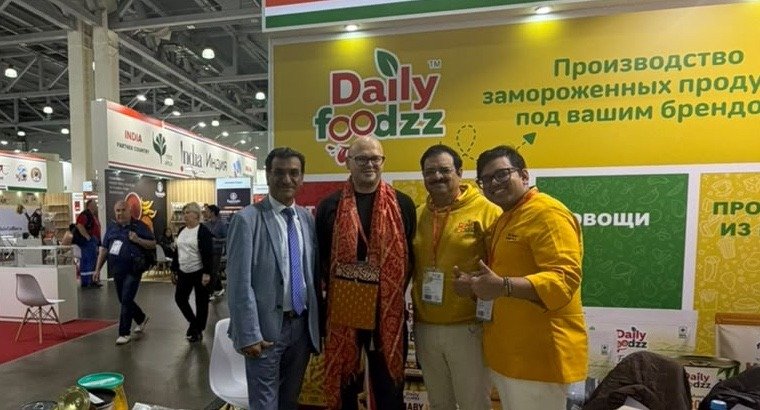
Moscow Diaries – Final Post | By Anant Agarwal, Co-founder & Chef, Daily Foodzz | September 2026
WorldFood Moscow 2026 closed on the 18th. I had a return ticket.
I did not use it for several more days, because by the time the hall emptied I had a set of invitations I had not anticipated – to come out to plants, to sit in on production meetings, and in one case to spend an afternoon at a fryer with a technical team working through a question on their line.
I went to all of them.
This is the last post in this series, and it is about what happened after the stand came down. In some ways it is the part that mattered most.
Why the Invitations Came
There is a specific reason I was asked, and it is worth being plain about it rather than modest.
I trained as a chef. I was a chef before I was a manufacturer, and I am still the person in this business who decides what a product should taste like, feel like, and do under heat. I am also the person responsible for whether our plant can actually make that happen at volume, on a line, in a season where the raw material is not cooperating.
Those two things do not often sit in the same person. Most food businesses have a technical team that understands process and a commercial team that understands margin, and a translation problem in between. And most suppliers who turn up to discuss a product question arrive with a sales person who can express sympathy and very little else.
So when people in Moscow found that the person on our stand could open a bag of frozen product, cook it properly, and talk through what was happening to it – and then, in the same conversation, work through what that meant commercially – they asked whether I would come and look at a few things with them.
That is the whole reason this last week happened. Not our brochure.
🥔 A distributor’s warehouse outside Moscow
A serious operation – experienced people, a well-run facility, a technical team who know their line far better than any visitor.
This is a properly run facility, a technical team who know their own line considerably better than any visitor could. They had taken in more than ten reefer containers of French fries, and across those containers the product was not behaving uniformly. Some of it performed as expected. Some of it did not. Nothing about the packaging or the frozen product distinguished one from the other.
They had already formed a good view of what they were seeing. What they wanted was a second read from someone who cooks – specifically, from someone who also manufactures – because the picture is easier to complete when you can look at it from the raw material end and the fryer end at the same time.
If you work with frozen fries you will recognise the situation, and you will know it is not a complaint about one bad pallet. It is a planning question. Production scheduling, yield forecasting and customer commitments all depend on knowing what the next carton will do.
So we cooked.
Over a few hours we ran six to eight batches through the fryer – properly cooked at working temperatures, not a token sample – because with this product that is where the information is. In the frozen state the batches looked much the same. They stopped looking the same somewhere around ninety seconds into hot oil.
Two conversations were running in that room at once.
The first was technical. What was happening to the product, why the batches diverged, and where in the chain – well before those containers were loaded – the divergence was set. That is a chef’s question, and the evidence is in texture, colour, oil behaviour, and what the fry does in the minutes after it leaves the fryer. It is not something you read off a specification sheet.
The second was commercial. What the variation was doing to them in practice – production time, scheduling around uncertainty, and what it means when you cannot give your own customer a firm promise on consistency. That is a manufacturer’s question, and it is one I deal with from the other side of the same problem every season.
Being able to hold both at once, in the same room, on the same day, turned out to be a useful thing. It is the most practical contribution I can make to anyone importing frozen food from India.
We met four more times after that. Different people in the room on different days, each session more specific than the last, working towards something that holds in production rather than something that reads well in minutes.
I am not going to publish what came out of it. Part of it is theirs and not mine to share, and the rest deserves proper treatment rather than three paragraphs at the end of a trade show diary.
I am writing that up separately – a full technical piece on French fry consistency, what determines it, and where it is decided. If that is something you have dealt with, it will be worth your time. It will be on this site shortly.
One of the Better Conversations of the Week
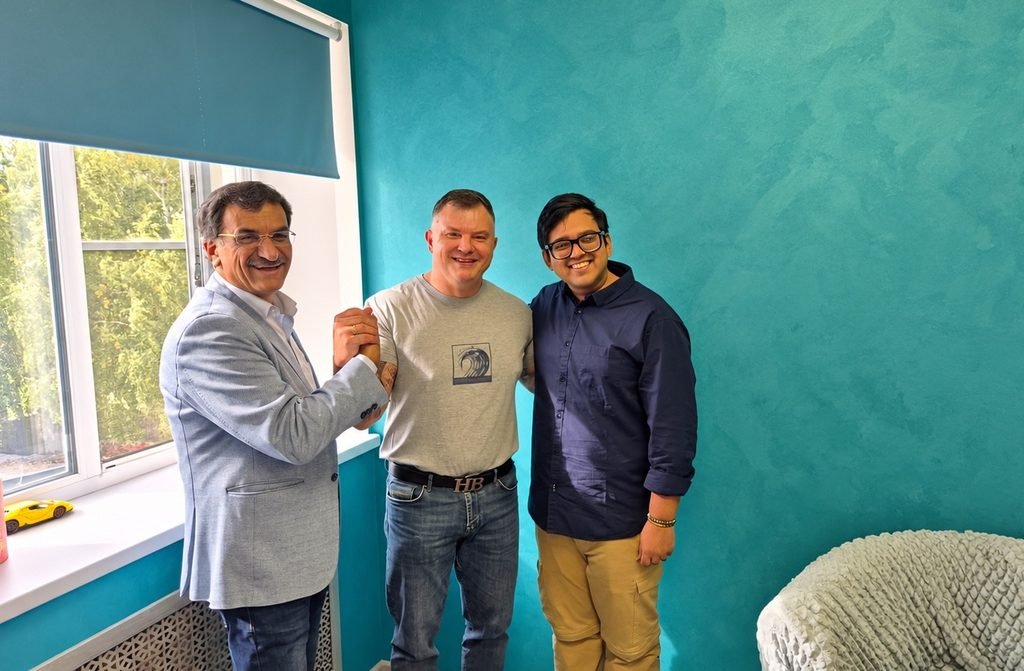
One meeting I will remember for a long time.
I spent time with a brand chef at one of the biggest food companies operating across Russia and the CIS – a man who also happens to be a champion wrestler in this country. It is a rare combination of a career, and he is exactly the kind of person you hope to find across a table.
We talked as two chefs do, which is to say directly and about specifics – how a product behaves, what works in a Russian kitchen and what does not, how an ingredient has to perform before anyone will build a menu item around it, and where Indian frozen product currently sits in that judgement.
I learned more in that conversation than in a fair number of formal meetings. A chef who has to stand behind a dish asks better questions than almost anyone, and the answers have to be good.
What I Took From Being Asked @ WorldFood Moscow 2026
A quieter observation from the week, and one I am still thinking about.
Several of those invitations came from businesses that had already bought. Containers on the ground, paid for, and the resulting questions being worked through in-house – because the supplier who sold the product was either not equipped to help or had considered the transaction complete at the invoice.
I do not think a supplier relationship that ends at the bill of lading is worth very much to anyone.
We ship a product. But what our customers are really buying is the assurance that it will behave the way they were told it would, and that if something needs looking at, someone will get on a plane.
That is not a slogan. It is what I did last week, at facilities where we are not yet the supplier.
On Frozen Storage – We Pay for It Too
Something else came up repeatedly, and it is worth addressing because suppliers tend to be strangely silent about it.
Frozen products cost money to hold. Every day a pallet sits in a chamber, someone is paying for that space and that temperature. It is not a footnote on an invoice – for a business moving volume it is a real line, and it behaves differently depending on how a shipment is structured, how fast stock moves, and how much of it sits waiting.
I know this because we pay for it ourselves. We manufacture, and we run our own frozen storage. What sits in our chambers and for how long is our cost before it becomes anyone else’s, and I make decisions about it every week.
So when the structure of a shipment comes up, I am not reading it from one side. I am reading it from both ends of the same problem. A supplier who has never carried that cost will quote a price and consider the conversation finished. I would rather have the longer one, because the price on the invoice is not the number that decides whether an arrangement works for you.
The HORECA Conversations
A second thread from the week, from a different direction entirely.
I spent time with people supplying the HORECA channel – decision-makers running genuinely large product baskets, dealing with many lines and many origins at once.
Two things came out of those conversations worth stating.
The first is that our range is broad enough that a shipment does not have to be one product. We make frozen French fries, IQF sweet corn, baby corn, green peas, mixed vegetables, retort corn on the cob, and frozen Indian snacks. Consolidating across those is not a favour or a reluctant exception. It is a normal conversation for us and we are set up for it.
The second is about starting small. Four or five tonnes is not a nuisance order to us. It is a sensible way to put something into a market and find out what actually moves – at real volume in real outlets, rather than on the strength of a sample box and an optimistic forecast. Whatever performs, scales. Whatever does not, you have learned it for a fraction of what a full container would have cost you.
I would rather begin that way. It tends to produce a relationship that lasts, and fewer unpleasant surprises for everyone.
What Has Not Changed
I have written a fair amount over these days – about what happens to a fry after it hits the oil, about what comes off our sorting line before anything is packed, about grading honestly, and about our plant being open to anyone who wants to look at it.
All of it comes back to one thing, which is the rule we actually run on:
If we won’t eat it, we won’t ship it.
There is a great deal of thinking behind how we hold that line – in what we buy, how we sort, what we reject, how we schedule, and what we are willing to absorb rather than pass on. That work is real and deliberate. But the rule itself is not complicated, and it does not move.
Where This Leaves Us
I came to Moscow to exhibit. I am leaving with something more useful than a stack of cards – several conversations already about specifics, an open piece of work with a facility I have come to respect, and a much clearer picture of what is genuinely difficult for people importing frozen food into this market right now.
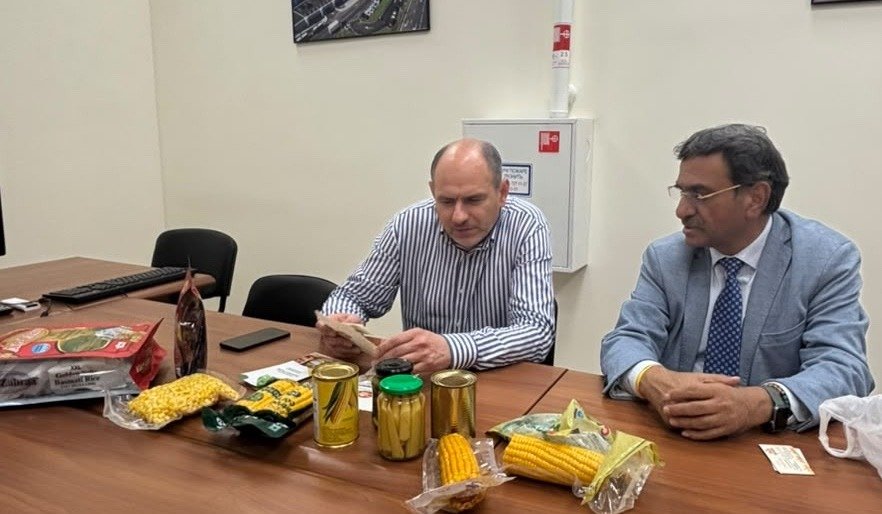
To everyone who came to Daily Foodzz frozen sweet corn, baby corn and corn on the cob
shown in a product discussion during WorldFood Moscow 2026 @ Stand A5097/17, asked a difficult question, opened their facility to me, or stood at a fryer with me for an afternoon: thank you. It was the most worthwhile week I have had in a long time.
What is next: the full technical piece on French fry consistency, which I am writing now.
And the standing offer from earlier in the week has not expired. Our plant is open. Come yourself, send your team, or send an independent surveyor. We will make the arrangements.
Talk to us – or ask for a sample and fry it in your own kitchen. That is still the test I would rather be judged on.
Frequently Asked Questions
Does Daily Foodzz visit facilities to work on product questions?
Yes. Anant Agarwal, co-founder, is a trained chef as well as a manufacturer, and travels to facilities to assess frozen product in working conditions – cooking it rather than inspecting it frozen – and to work through the production and cost side alongside the technical one.
Why does frozen French fry performance vary between containers of the same product?
The differences that matter are not visible in the frozen state and only appear after frying. They are set well before shipping, in the raw material and in processing, which is why they cannot be assessed from a frozen sample or from documentation alone.
Can a shipment from Daily Foodzz include more than one product?
Yes. Consolidating across our range – French fries, IQF sweet corn, baby corn, green peas, mixed vegetables, retort corn on the cob and frozen Indian snacks – is a normal arrangement for us, not an exception.
What is the smallest quantity Daily Foodzz will supply?
We are comfortable starting at four to five tonnes for a market trial. It is a practical way to test real demand before committing to larger volumes.
Does Daily Foodzz operate its own cold storage?
Yes. We manufacture and run our own frozen storage, so storage cost and stock movement are things we carry directly rather than observe from a distance.
Can I visit the Daily Foodzz plant?
Yes. You are welcome to visit yourself, send someone from your team, or send an independent surveyor. We will make the arrangements.